
The Challenge
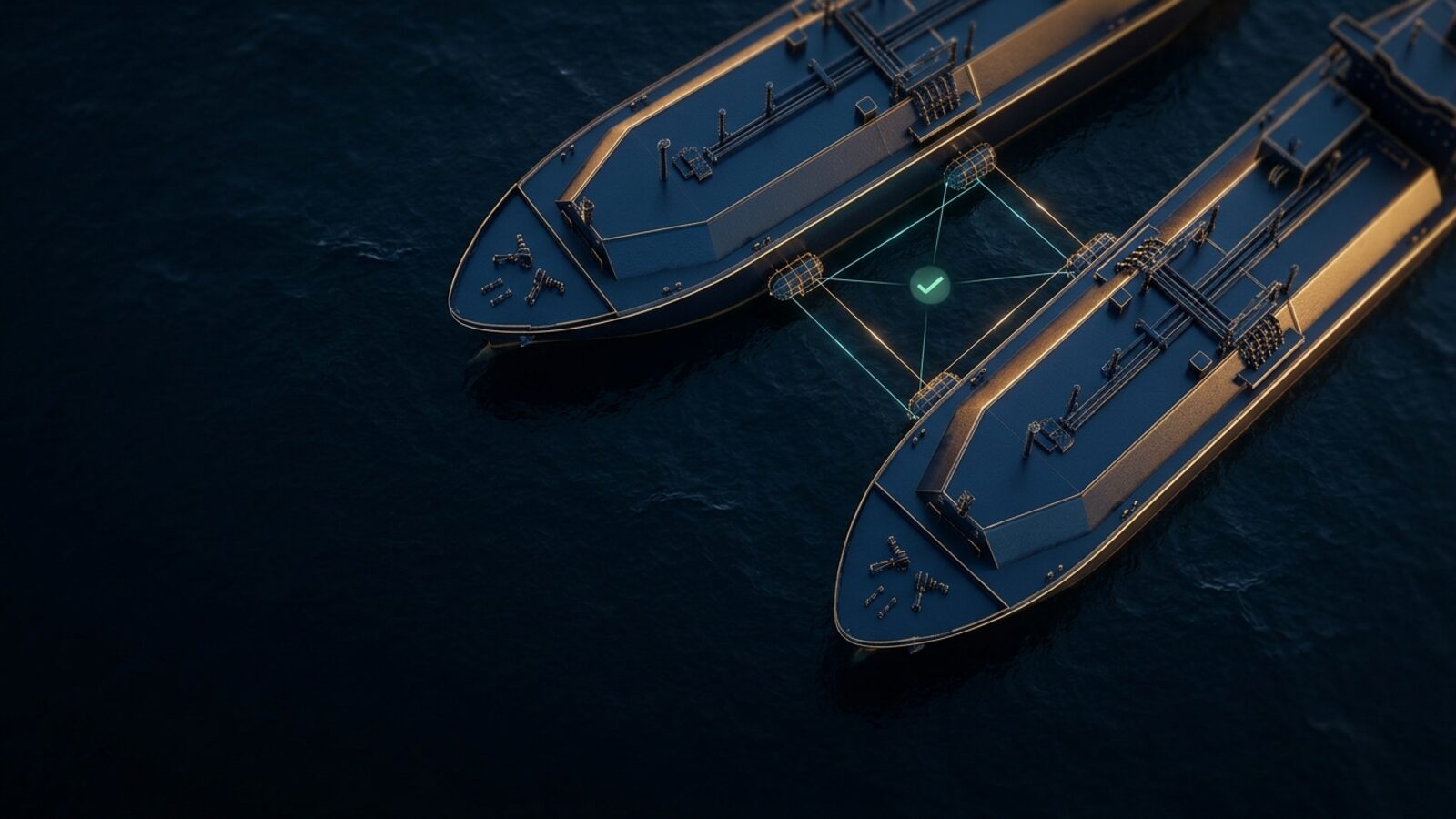
Before one ship passes LNG fuel to another, an expert must decide whether the pair can do it safely. LNG is stored at about minus 160 degrees Celsius and methane that leaks can ignite, so the check is required and the transfer cannot go ahead without it. The check covers whether the ships can lie side by side, whether fenders and mooring lines hold the right angle, whether the fuel connection points line up, and whether hose length, diameter and pressure ratings fit. Companies did this with spreadsheets, checklists, email threads and drawings. Data from the other ship often arrived late or incomplete, and the result was hard to explain to the buyer.
Joining a Product Team
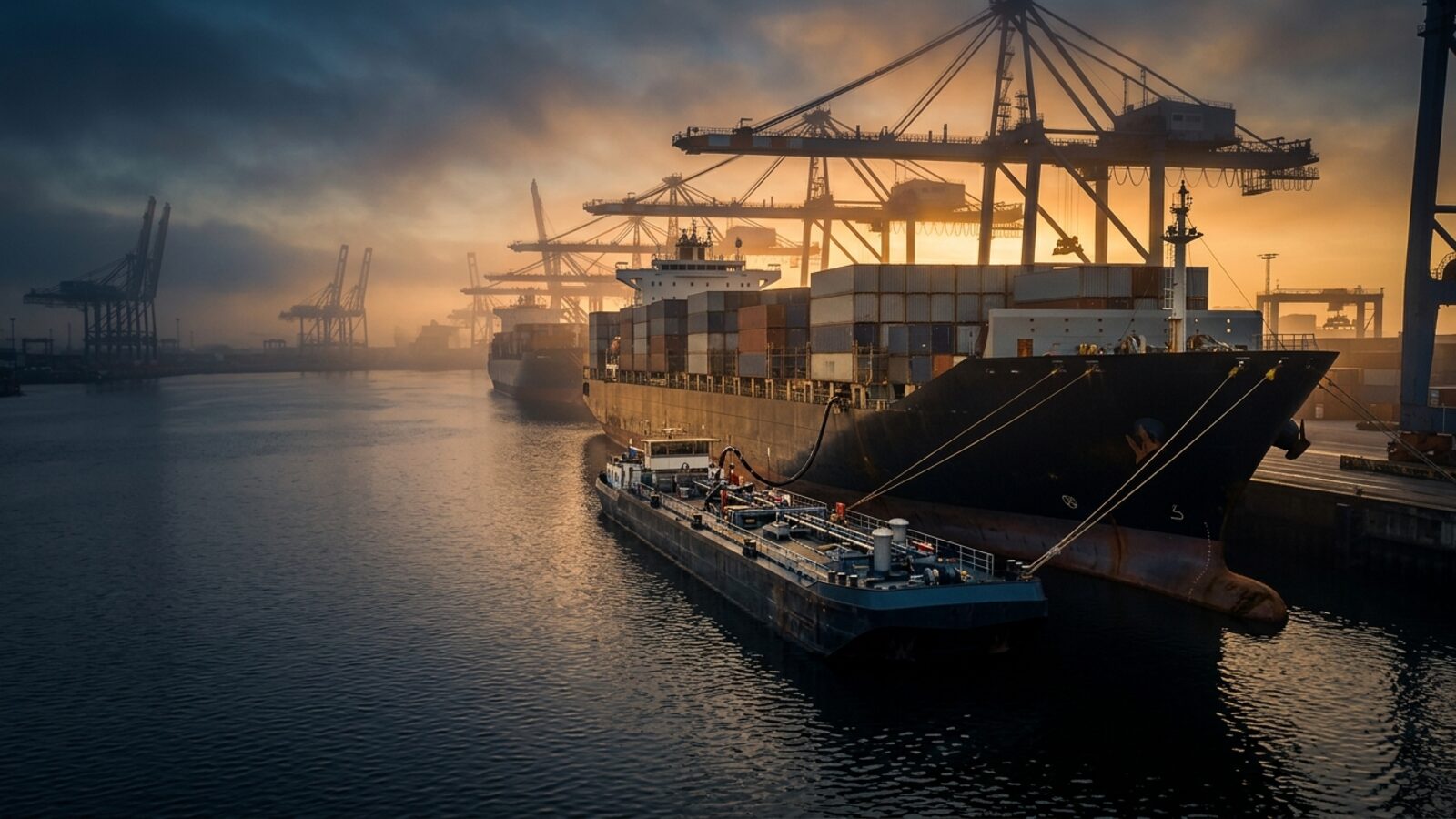
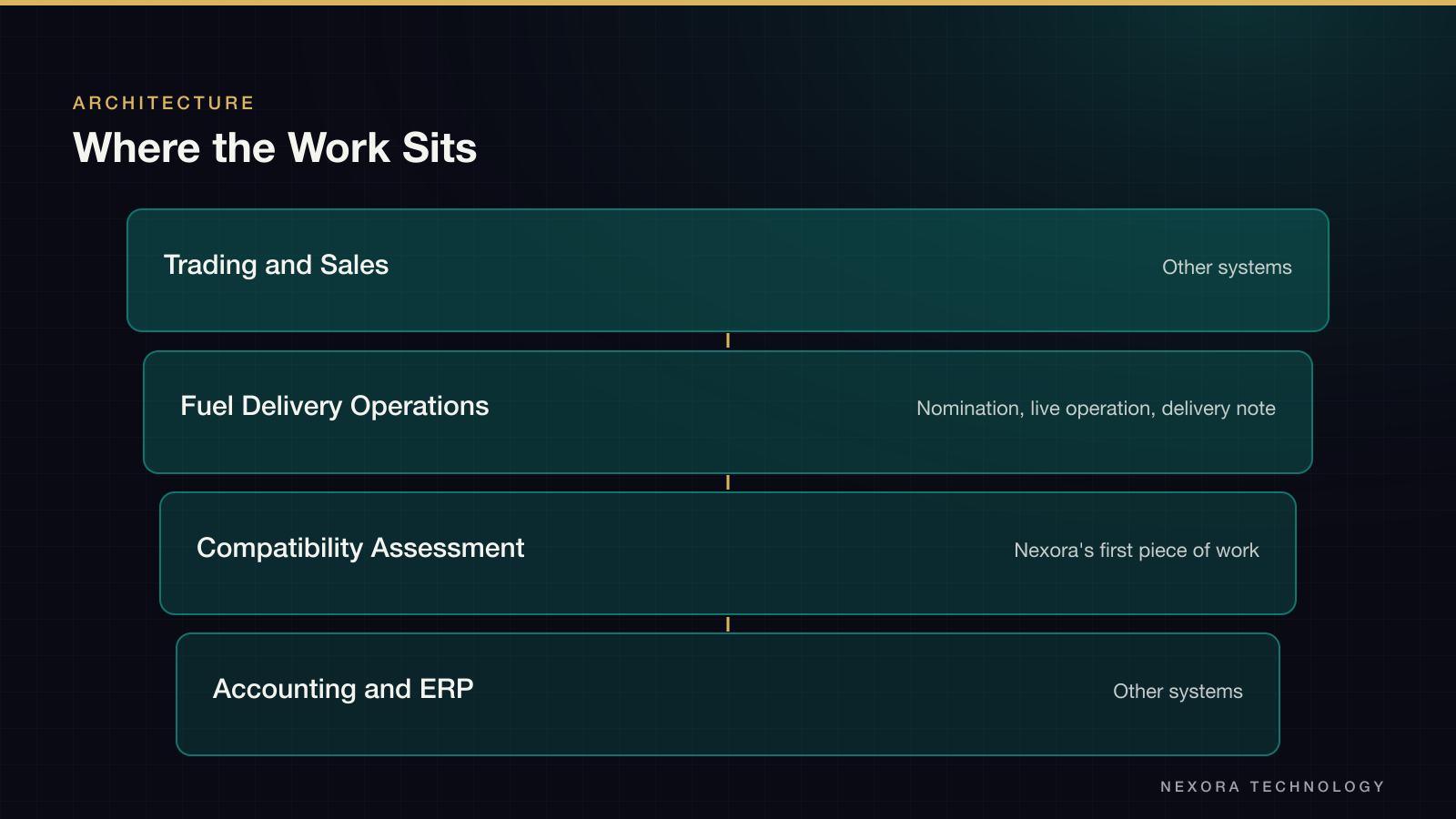
The client builds a platform that digitizes fuel delivery for ships: nominating a delivery, tracking the operation live and issuing the electronic delivery note. Nexora did not build a separate product beside it. Our engineers joined the client’s engineering organization, worked in its repositories and followed its review and deployment rules. The LNG compatibility application was the first piece of work the Vietnamese team took on, and later work moved into the platform’s port-side services and web applications.
The Assessment Application
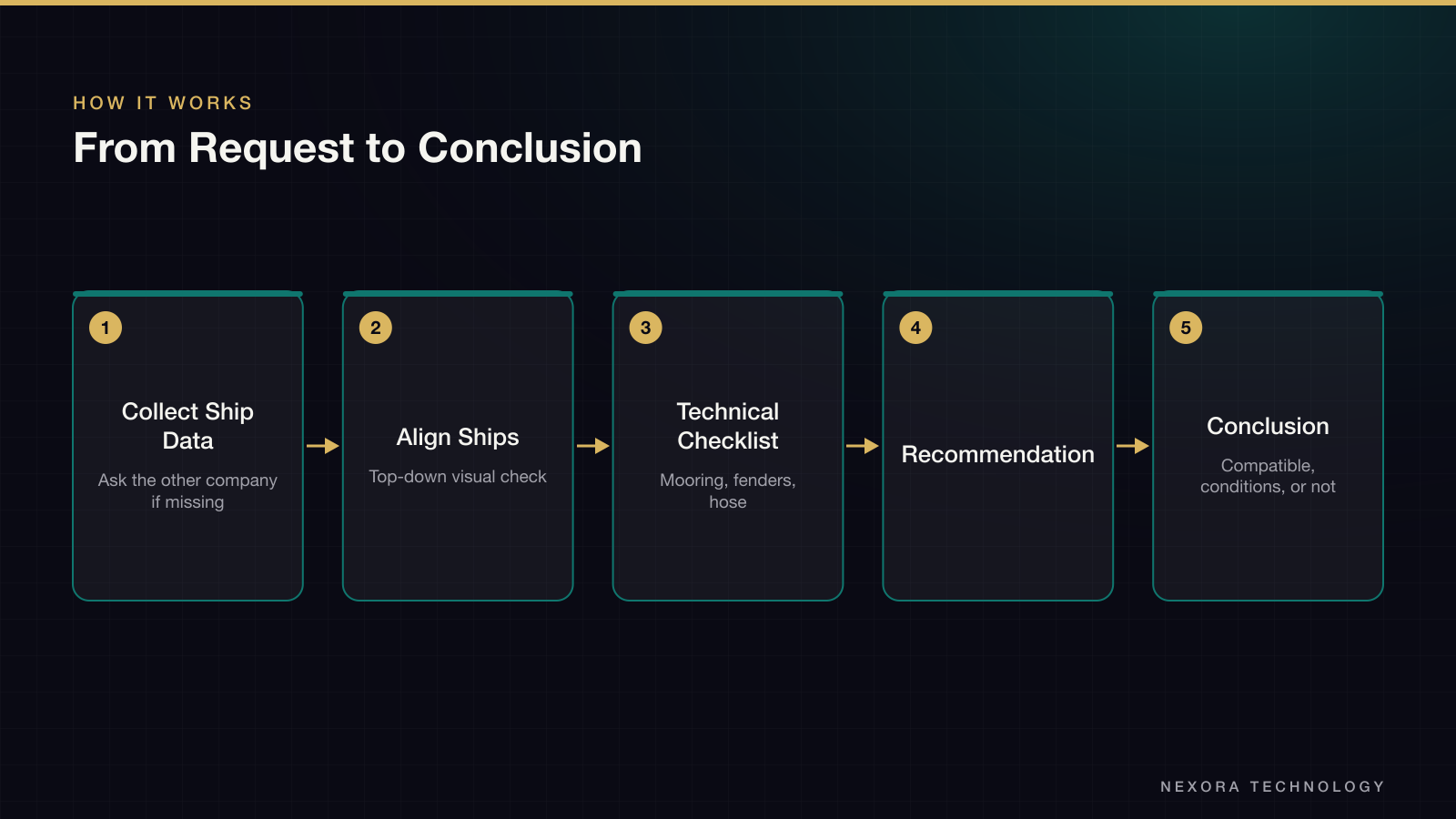
The application replaces the spreadsheet-and-email routine with one guided process. An assessor creates an assessment, collects the technical data of both ships, and asks the other company for missing items through the application. The assessment then moves through a checklist, a recommendation and a conclusion.
- Structured forms for ship dimensions, fuel connection points, fenders, mooring and draft
- A request flow that lets one company ask another for missing ship data
- A waiting-for-data state so incomplete assessments are visible, not lost
- A checklist, written recommendations and one of three conclusions: compatible, compatible with conditions, or not compatible
- Versioned ship data and users from several companies
Seeing the Two Ships
Text alone does not show risk. The application includes a top-down view of both ships side by side. The assessor places fuel connection points and fenders, and the view lines the ships up, shows distances and mooring angles, and warns when a limit is broken, for example when connection points are several meters out of line. The picture can be exported into the report that goes to the buyer, so the buyer sees what the assessor saw. The view began as an early version fed by a local data file and was designed to switch to real ship registry and position data.
Key Decisions
Three choices shaped the work. The application runs on its own and can share sign-in with the main platform, so a company can use it without the full product. The platform stays in the operations layer: it records and standardizes delivery operations and leaves trading, pricing and accounting to systems built for them. And the final conclusion is meant to feed the main platform later, so a delivery can show whether its two ships were cleared.
What the Platform Handles
The wider platform shows why the compatibility step needs clean data. A delivery order is the source for scheduling, live operation and the electronic delivery note, so one wrong value spreads. Crews often have weak connectivity, so the mobile workflow has to work offline and resolve conflicts when it reconnects. Every step is time-stamped and audited because the regulations of the port require it. Nexora engineers also worked on the services that submit delivery records to a port authority and a trade data exchange.
Status and Tech Stack
At the time of writing the assessment module was still being developed, with regular recorded walkthroughs sent to the client for feedback. The stack on our side is Node.js, React and PostgreSQL, alongside the client’s .NET 8 services with a PostgreSQL document store, message bus and Kubernetes deployments through four environments from development to production.