Tracing Tea From Plot to Factory Gate, Even Offline on a Hillside
A solution design for a Farm module covering plots, growers, spray-interval locks, weigh tickets and two-way traceability.
Tracing Tea From Plot to Factory Gate, Even Offline on a Hillside
Results
The Challenge
Tea sourcing is a data problem spread across hillsides. Growers are dispersed, signal is weak, and most data creators are not company staff. Fresh leaf spoils in hours. Money flows against the data, since growers are paid by weigh ticket and any weight or grade error becomes a cash dispute. Rules on planting-area codes, pesticide residue and traceability add pressure, and export markets are tightening residue limits.
What We Designed
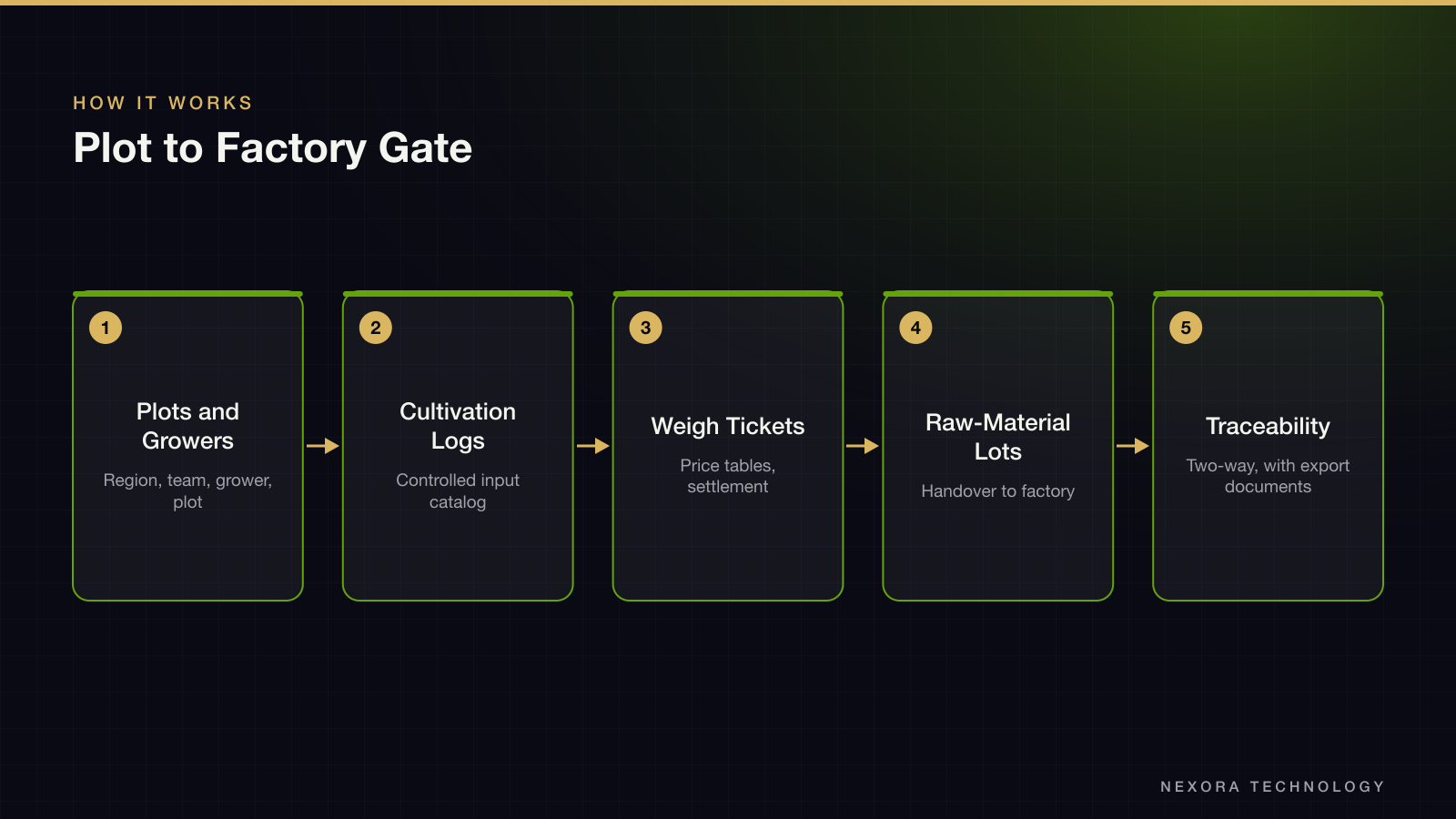
The Farm module owns everything before the factory gate: plots, teams and growers, cultivation logs, compliance, harvest, weighing, grading, grower payment, transport and backward traceability. The partner’s MES owns everything from the production order onward. The boundary is cut at the gate for two reasons. The fresh-leaf lifecycle differs sharply from processing, and Farm can go live per harvest round before the MES is finished.
- Region, team, grower and plot hierarchy with time-effective history
- Cultivation logs with a controlled input catalog per export market
- Weigh tickets, price tables and grower settlement statements
- Raw-material lots and handover to the factory
- Two-way traceability and export documentation
Key Design Decisions
A spray record automatically computes the earliest harvest date for that plot. Weighing and harvest plans on a plot inside its interval are blocked, not just warned, and an override needs a manager role and a reason. A signed weigh ticket cannot be edited. Corrections are new records that reference the original. Each side owns its own events, and neither overwrites the other’s history.
- Ticket IDs generated on the device, unique even offline, and idempotent on sync
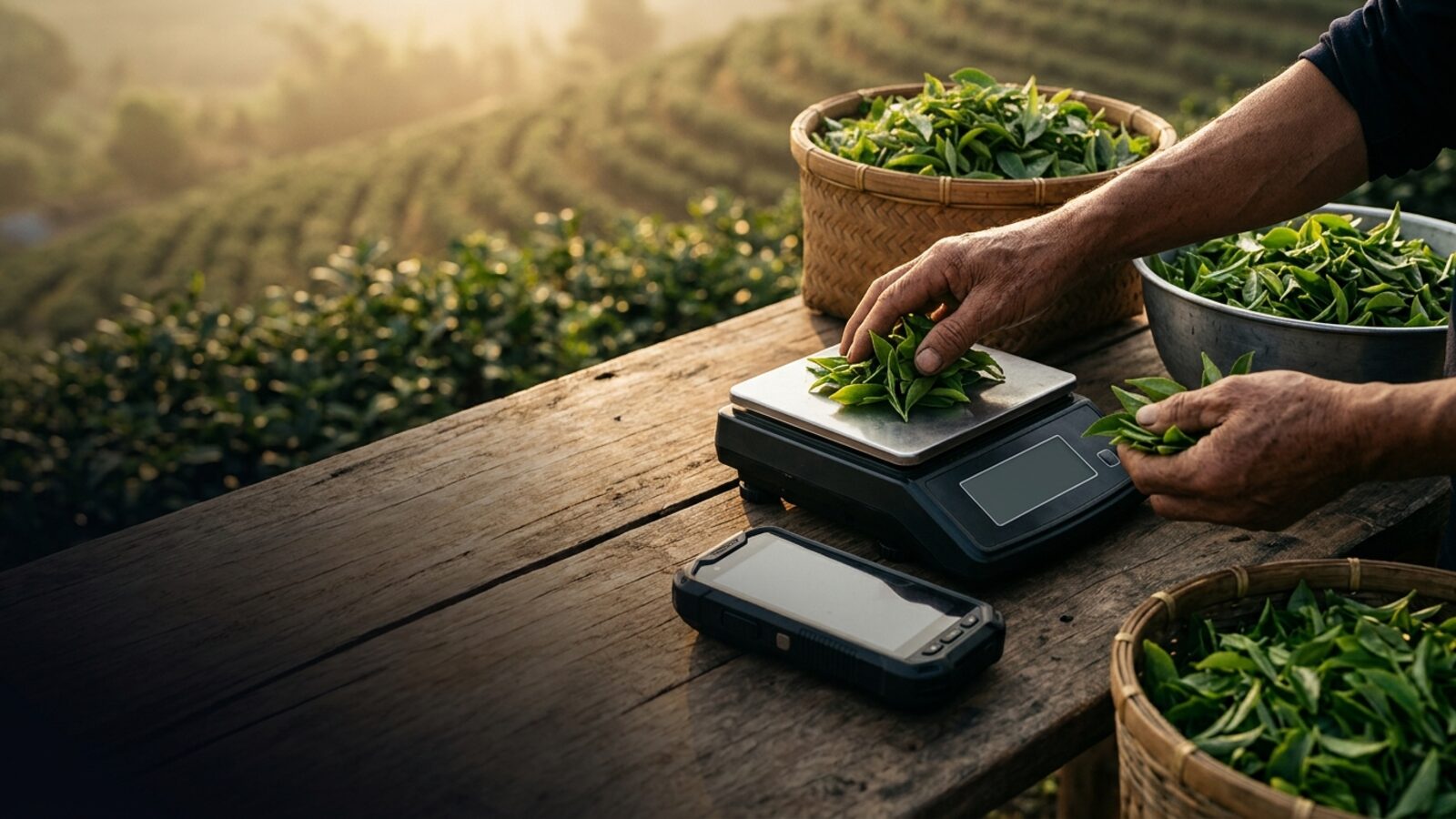
- Weights read from electronic scales, with manual entry plus a photo as fallback
- Transport loss computed as the difference between two events, never typed in
- Lot codes in national traceability format and GS1 for international buyers
How It Works in the Field
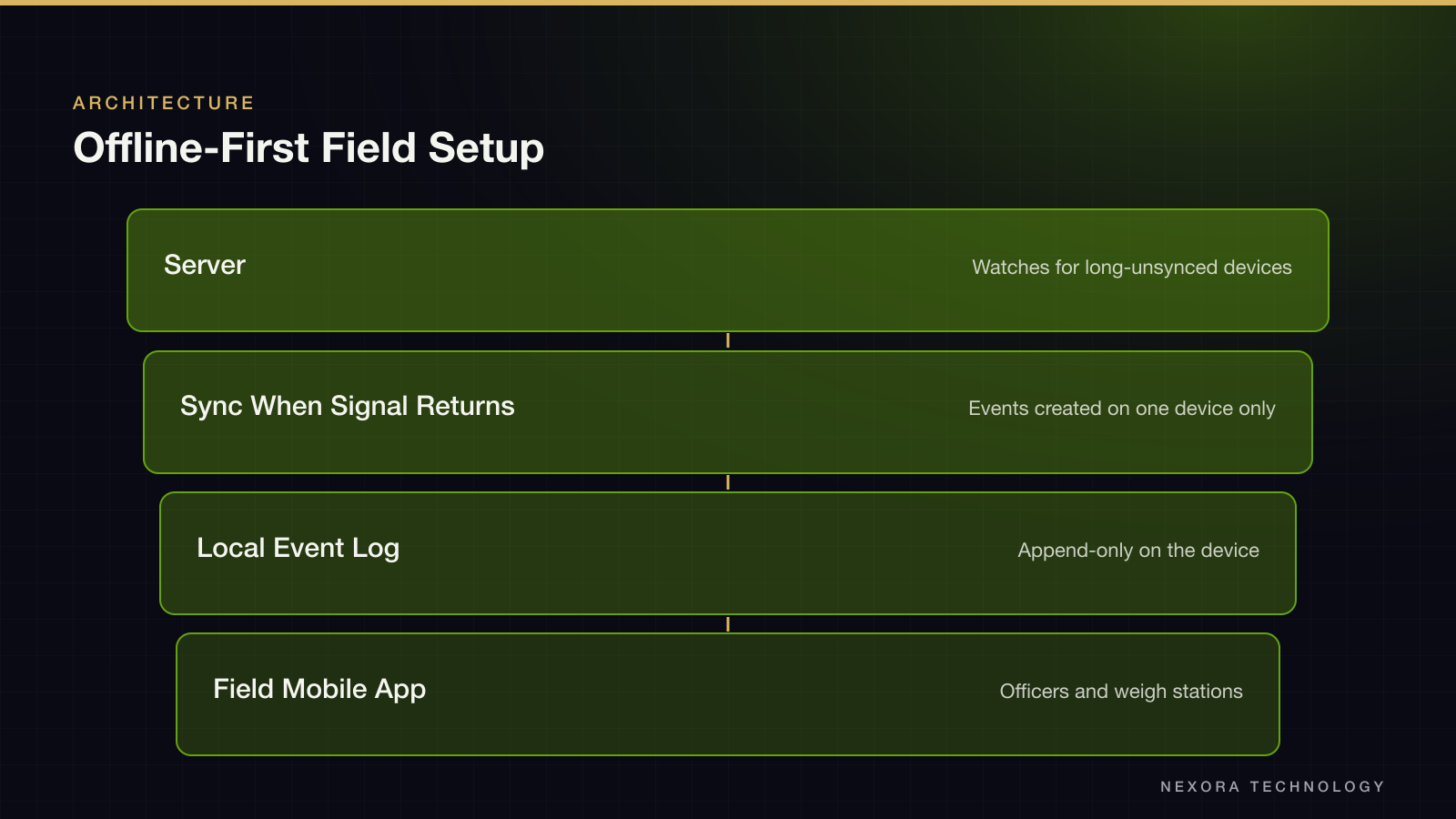
Field officers and weigh stations run a mobile app that keeps a local append-only event log and syncs when signal returns. Business events never conflict because each is created on one device only. The server watches for devices that stay unsynced too long, since silent failure is the top risk for any field system. We chose an existing offline-sync library over writing our own engine.
Rollout Approach
Stage zero is on-site survey and a signed data contract with the MES partner. The pilot then runs one team through one harvest round at the weigh station, where money and data meet. Cultivation and compliance, MES handover with traceability, and full rollout follow. Each stage closes on real harvest data running through the system.
Got a similar project?
Tell us about it. First consultation is free.