A Skin-Analysis Mirror Whose Numbers Customers Can Trust
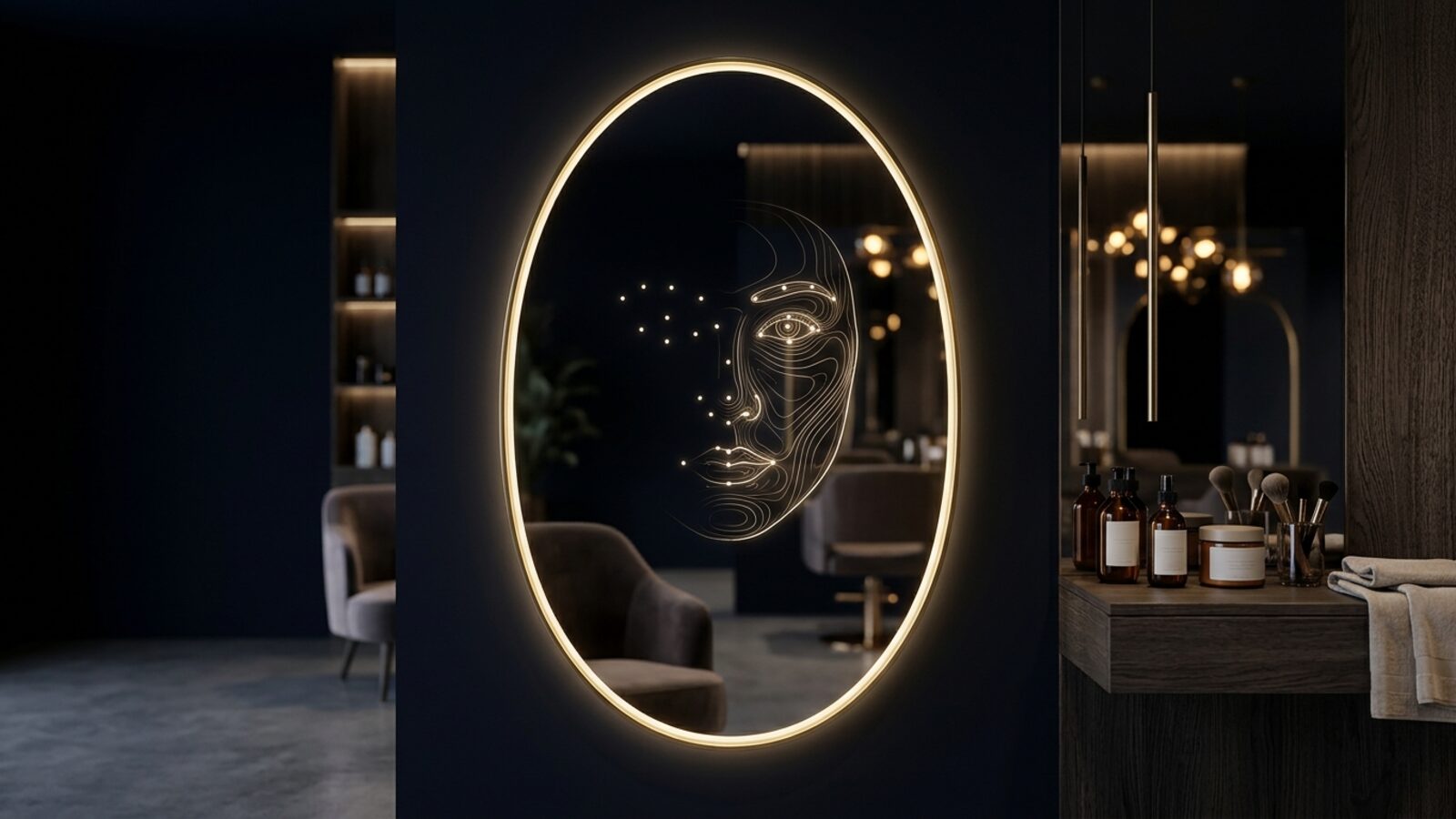
An architecture sketch for a smart beauty mirror that analyzes skin on-device and shows no number it cannot back up.
A Skin-Analysis Mirror Whose Numbers Customers Can Trust
Results
The Challenge
A skin score on a mirror is a promise made by the brand. If the number is wrong, trust falls faster than a retry prompt could ever cost. Skin measurement also depends more on lighting and optics than on the model. And face images carry the highest privacy risk in the product, both legally and in public perception.
Design Principles
Four principles shape the sketch, each taken from lessons on a production vision system. They push accuracy, privacy and calibration into the architecture itself instead of leaving them as features to add later.
- Measurements must be trustworthy before they look good, with reference checks built in
- On-device first: face images stay in the mirror and only extracted indicators leave
- Calibration is a first-class part of the design, alongside the AI
- The IP sits in the data loop, not only in the model
Proposed Architecture
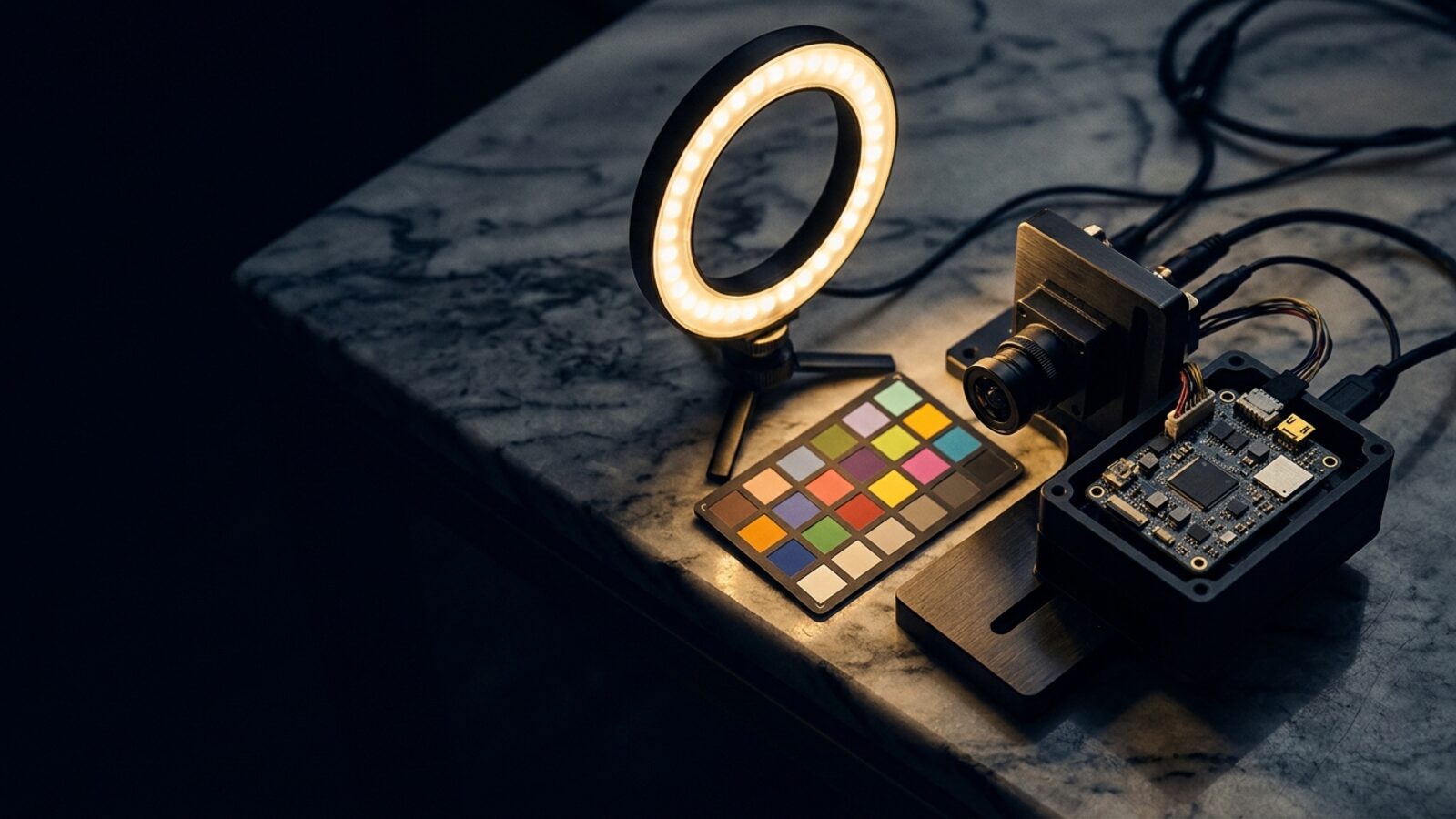
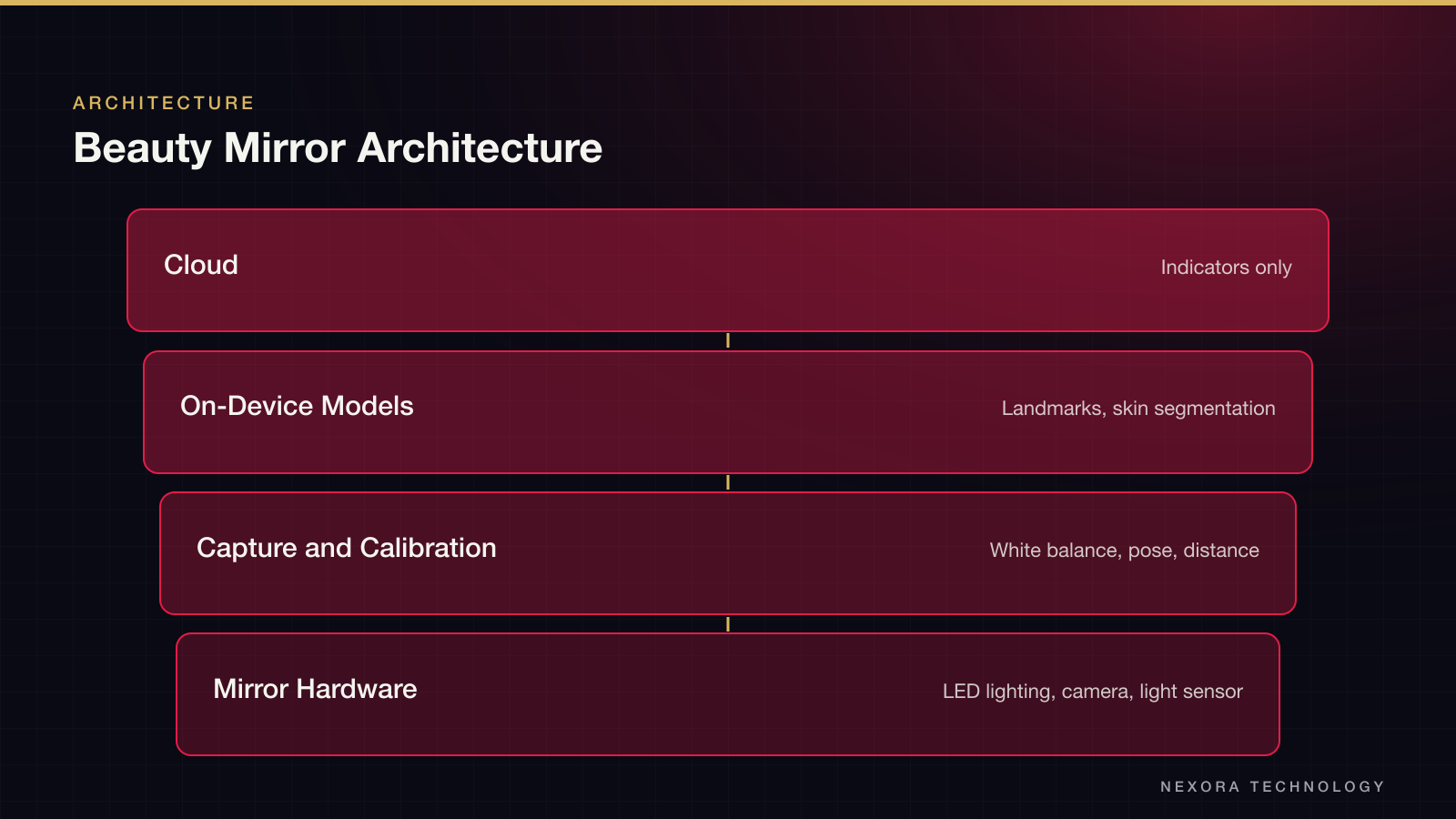
The mirror runs controlled-color-temperature lighting, a camera module and an ambient light sensor. Capture and calibration handle white balance, lighting normalization and pose and distance checks. On-device models do face landmarks, multi-layer skin segmentation and guarded skin indicators, running on ONNX. A companion app and cloud service keep skin history over time and receive only processed indicators, with consent.
Key Design Decisions
Preprocessing is a hard contract between training and the device, enforced by an evaluation harness, because a silent mismatch there degrades accuracy. Lighting is active and controlled, which lowers the burden on both the model and the dataset. Each indicator shows only when valid measurement conditions are met. With too little evidence the mirror asks for a re-scan and shows no figure.
- Inference on the device, cloud receives indicators only
- Active LED lighting plus ambient sensing
- No valid conditions, no displayed number
- Model, dataset and calibration protocol owned by the client, built and transferred by Nexora
Prototype Roadmap
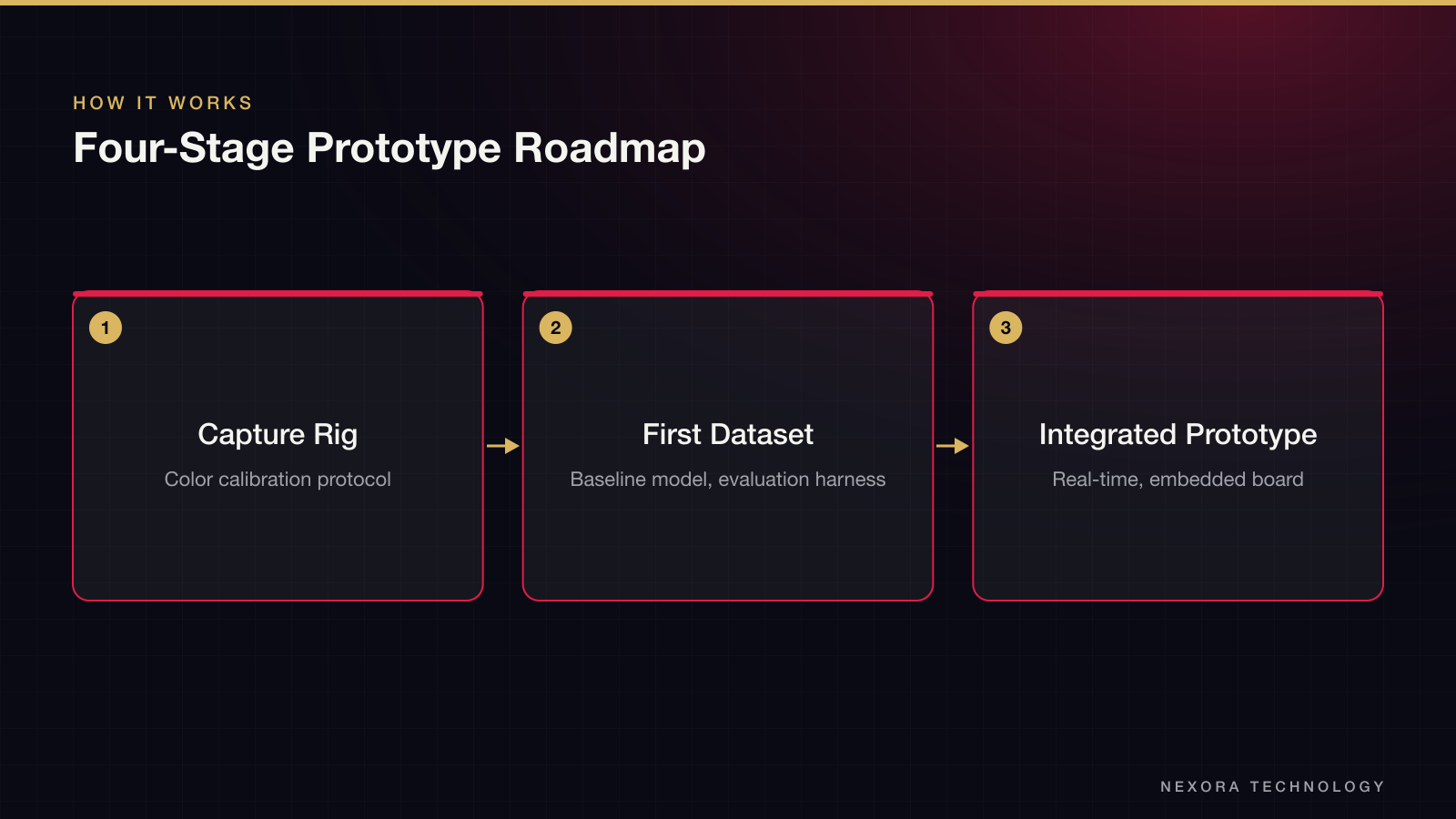
The plan has four stages. First comes an optical and capture rig with a color calibration protocol, then a first labeled dataset, a baseline segmentation model and an evaluation harness. Third is an integrated real-time prototype on an embedded board with a basic mirror UI. The last stage tunes form factor, heat and cost with a hardware partner. Nexora leads software, AI and system architecture, while mechanical and board work stays with the hardware partner.
Got a similar project?
Tell us about it. First consultation is free.