

The Ask
The hotel wanted a complete operating system on ERPNext: reservations, channel management, a commission-free direct booking engine, online check-in, payment automation including virtual credit cards from online travel agencies, housekeeping and guest messaging. Revenue management and analytics were to follow later.

An Honest Starting Point
ERPNext is a solid business platform, but it is not a hotel PMS out of the box. The Frappe hospitality app was archived by its maintainers in 2023 and is not production-grade. Reservation calendar, room inventory, folio, rate plans, channel sync, booking engine and housekeeping are therefore custom development on the Frappe framework. Nexora said so from day one and planned around it.
The Capability Map
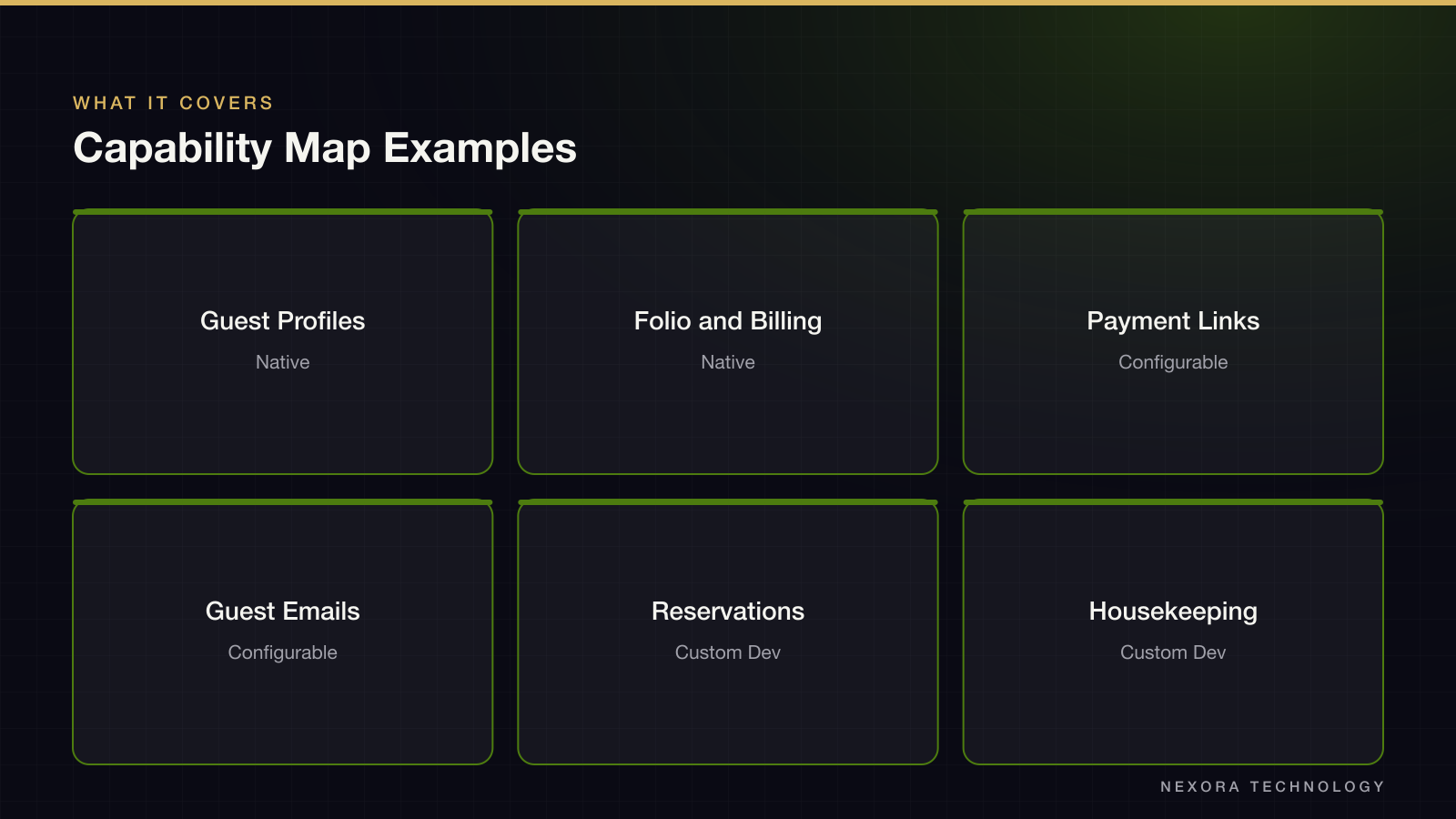
Every requested feature is classified by how much work it needs and when it should ship. Each is marked Native when configuration is enough, Configurable when a standard module needs setup or integration, or Custom Dev when it must be built on Frappe. Each also carries a complexity rating and a phase.
- Native: guest profiles, folio and billing, cloud hosting, REST API and webhooks
- Custom Dev: reservations, room inventory, allocation, check-in and check-out, housekeeping
- Configurable: payment links, automated guest emails
Architecture Principle
Build the operational core on ERPNext, where the team controls everything, and integrate proven third parties at the edges. Online travel agency sync goes through a channel manager that reaches hundreds of agencies with one integration, because direct connectors need certification and a commercial contract per channel. Card payments run through a major gateway with a middleware layer that keeps the PMS out of card-data compliance scope.
Three Phases, Gated
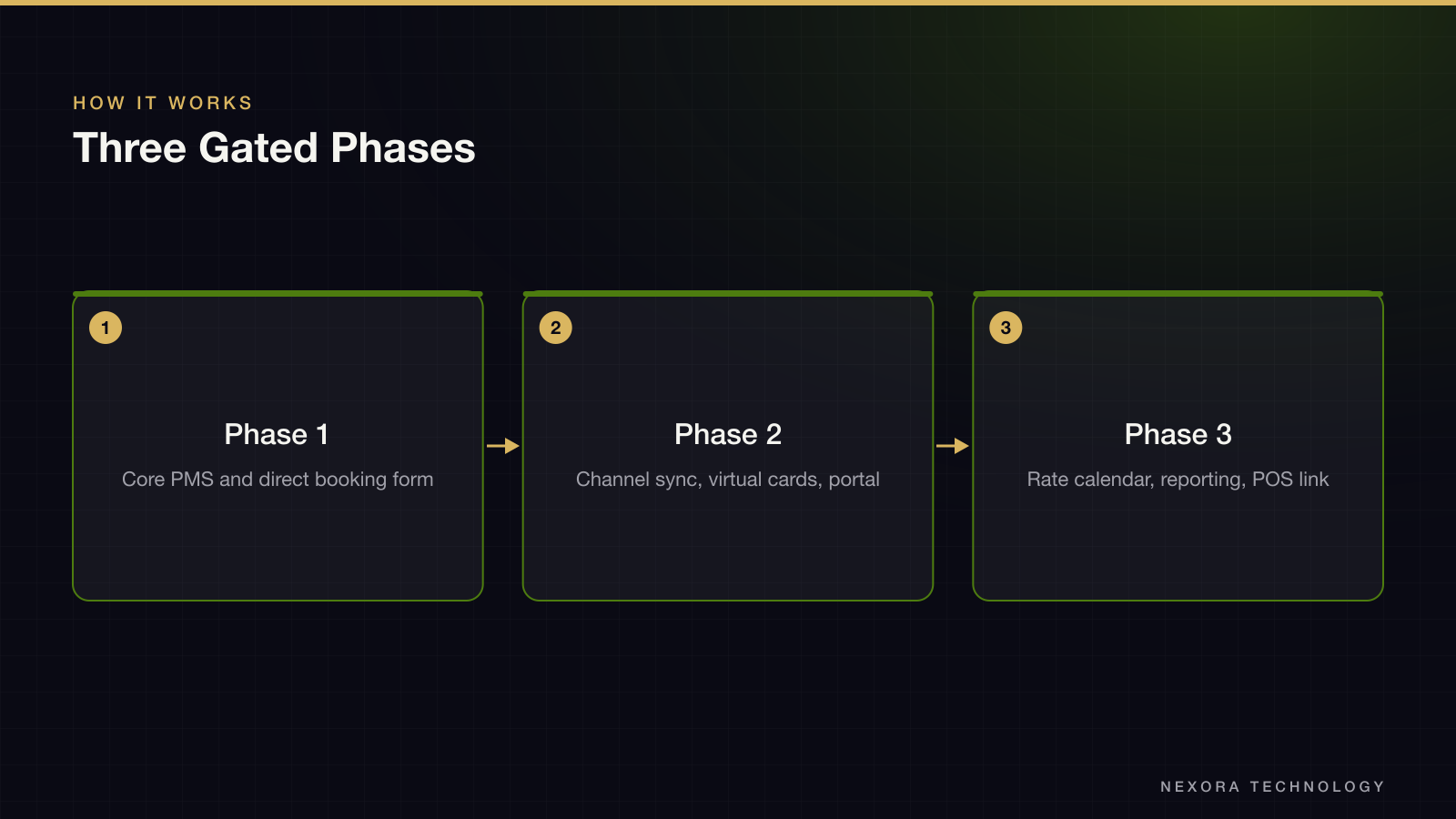
Phase 1 is a working core PMS: reservations, room allocation, check-in and check-out, folio, housekeeping, a direct booking form and payment links. Phase 2 adds channel sync, virtual card processing, an online check-in portal, group bookings, rate plans and a drag-and-drop calendar. Phase 3 adds a rate calendar, occupancy and revenue reporting and POS linking. The client can go live after Phase 1 and decide on the rest later.
Assumptions Stated Openly
The plan assumed a single property and a European market, and listed what it did not include, such as legacy data migration and post-launch support. Open questions on region, property scale, existing ERPNext use, website stack, languages, user roles and channel strategy were settled in a discovery sprint.